


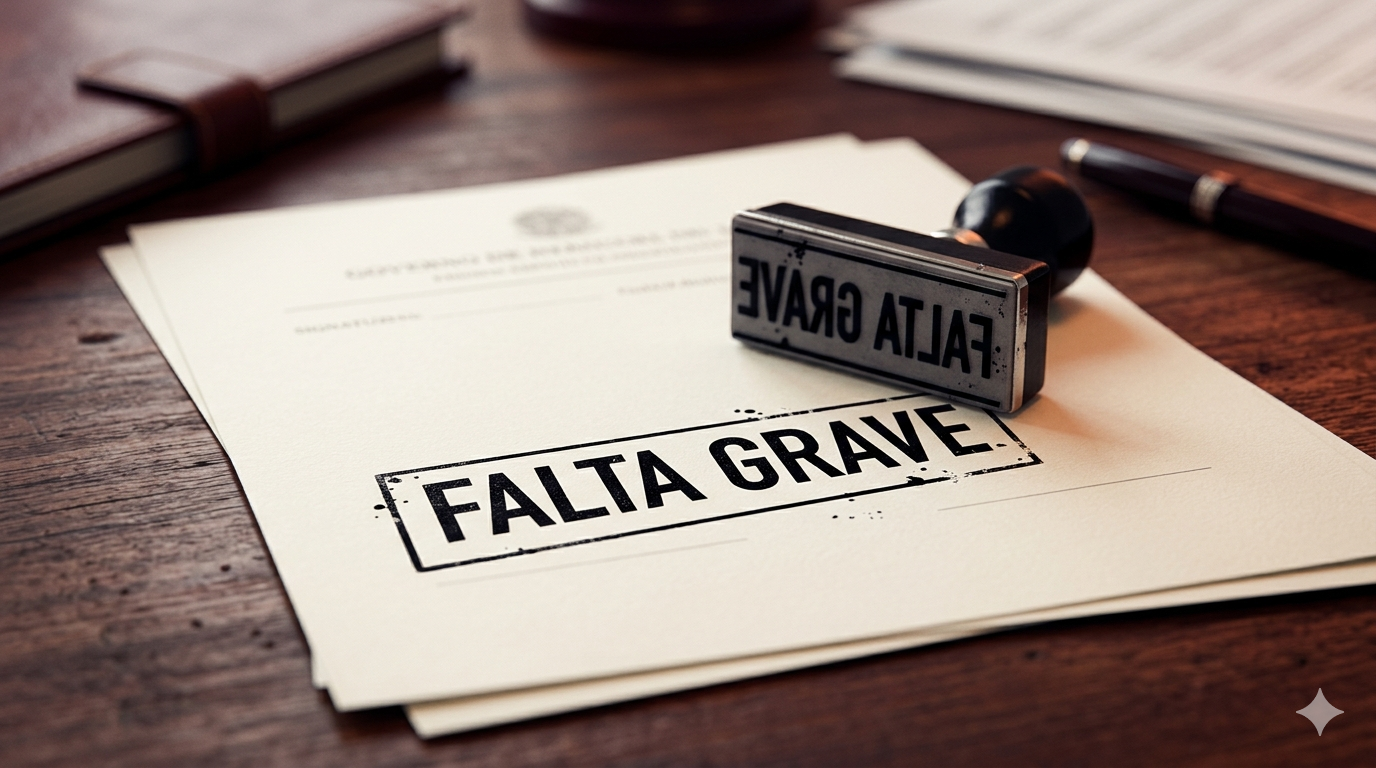
A sanction is not a verdict: the company has to justify it, and you can challenge it.
FIRST.— You’ve been sanctioned or suspended
A warning, a suspension without pay, a misconduct charge that you don’t know is real or invented. Before you accept it, it needs to be reviewed.
SECOND.— What the company can and cannot sanction
a) The company can only sanction you for breaches that are classified as misconduct in the law or in your collective agreement, which grades them as minor, serious and very serious (Article 58 of the Workers’ Statute).
b) The sanction must be proportionate to the seriousness of the misconduct and to the circumstances.
c) Sanctions for serious or very serious misconduct must be communicated in writing, stating the date and the facts behind them.
d) The law prohibits sanctioning with a reduction of holidays, any other reduction of your rest entitlement, or a fine deducted from your pay.
THIRD.— The most common sanctions
a) A warning, verbal or written.
b) Suspension of employment and pay for a few days.
c) Disciplinary dismissal, which is the maximum sanction and has its own rules. We explain it on the dismissals page and in the series of articles on disciplinary dismissal (in Spanish), starting with El despido disciplinario: qué es, tipos de despido y cuándo es legal.
FOURTH.— What I always check
a) Proportionality: the sanction has to be proportionate to the misconduct. They can’t suspend you for a week for being late one day.
b) Classification: the conduct you are accused of must be listed as misconduct in the collective agreement and with that degree of seriousness.
c) Form: they must notify you in writing, with the specific facts and the date. If they don’t do it properly, the sanction can be challenged.
d) Time limits: the company has a limited time to sanction you from when it became aware of the facts —10 days if the misconduct is minor, 20 if serious and 60 if very serious, and in any case 6 months from when it was committed. If they have missed the time limit, the sanction is invalid (Article 60 of the Workers’ Statute).
e) Truthfulness: what they say you did, is it true? Do they have real evidence, or just their word?
f) Procedure: some collective agreements require a prior step, such as a hearing or an adversarial file. If it wasn’t followed, the sanction may be void.
FIFTH.— How to react if you are sanctioned
a) If they ask you to sign the sanction, sign only to acknowledge receipt and add «not in agreement». Signing that you have received the letter doesn’t mean accepting what it says.
b) Keep the letter, the emails and the messages related to the facts.
c) Write down who was present and what happened, while you remember it well.
d) Don’t answer the company on impulse. What you reply can be used later.
e) Get advice before the deadline to file a claim runs out.
SIXTH.— The most disputed misconduct
a) Lateness: it depends on the collective agreement, which usually sets how many late arrivals in a period amount to misconduct and how serious. A single late arrival hardly justifies more than a warning.
b) Absences: justified ones (sick leave, paid leave) must be distinguished from unjustified ones.
c) Use of your phone or the internet during working hours: the company can monitor the means it provides, but with clear rules and prior notice, and respecting your privacy.
d) Disobedience and insults: not every refusal or argument is serious misconduct. We explain it in Faltas de obediencia y ofensas en el despido disciplinario (in Spanish).
e) Poor performance: to be sanctionable it must be continuous and voluntary. We explain it in Disminución continuada y voluntaria del rendimiento (in Spanish).
SEVENTH.— What you can achieve
a) Challenge the sanction before the Labor Court.
b) Have it annulled, in whole or in part.
c) If it is an unfair disciplinary dismissal, receive the compensation you are entitled to.
If you have been dismissed or sanctioned (warnings, suspensions), you have 20 working days to file a claim (Article 114 of the Social Jurisdiction Act). It is a forfeiture deadline that cannot be extended. Don’t let it pass: the sooner you act, the easier it is to gather evidence.
EIGHTH.— When one sanction is the start of something more
Sanctions accumulate. A warning you don’t challenge today can be used tomorrow to justify a bigger sanction, or even a dismissal for repeated misconduct. That is why it’s worth reviewing it when it arrives, not when it has already become a dismissal letter. The seven most common causes of disciplinary dismissal are explained in 7 causas de despido disciplinario (in Spanish).
NINTH.— Shall we talk?
The first consultation is free. If you’ve been sanctioned and you think it isn’t fair, we’ll review it. Call me: 656 70 59 75.